Cooking good food is only half the job. Getting it to the right customer, at the right address, on time, every single day, is where most tiffin businesses actually struggle as they grow.
A missed delivery does not just lose you one meal. It loses you trust, and trust is the entire foundation of a tiffin business.
If you are still figuring out how to start a tiffin service in India, delivery planning is worth thinking through early. If you already run one and deliveries are starting to feel chaotic, this guide will help you fix it.
Why Delivery Becomes a Problem as You Grow
In the early days, with 10 or 15 customers, delivery is simple. You know every address, every building, every shortcut. Somewhere between 30 and 100 daily orders, that mental map stops working:
This is almost always a sign that your tiffin business has outgrown an informal delivery system and needs proper zones.
What Is Delivery Zone Management?
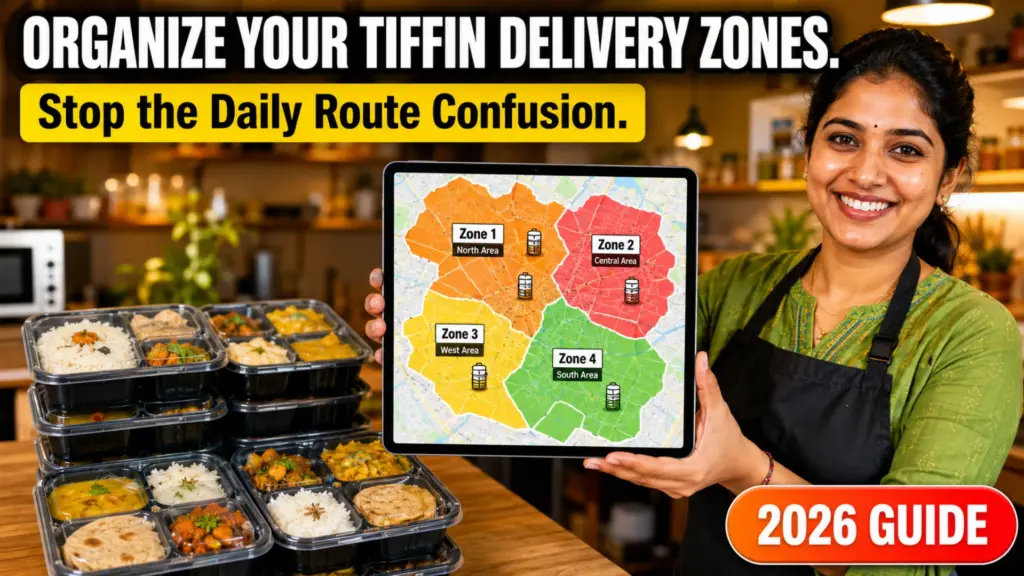
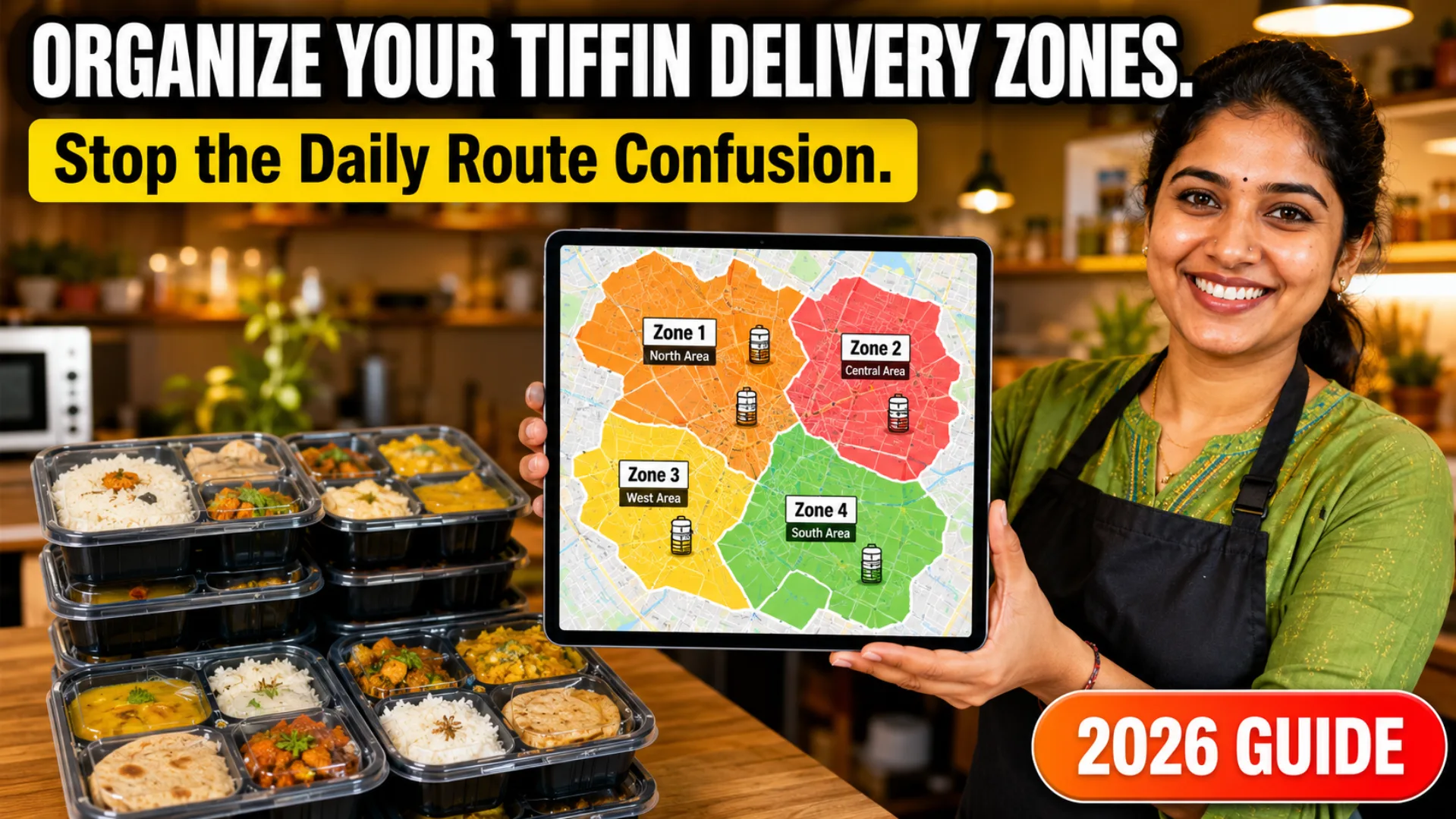
Delivery zone management means dividing your overall service area into clear, defined sections called zones, each with its own set of customers, and ideally, its own assigned delivery staff. Instead of one person trying to remember every address across the entire city, each zone has its own simple, manageable list.
This is one of the most important operational shifts a growing tiffin business can make, and it pays off in three specific ways:
Faster Deliveries
Staff learn their specific zone, buildings, and shortcuts. Routes improve over time without any extra effort.
Fewer Mistakes
A smaller, well-defined list of addresses means less confusion and fewer missed or wrong deliveries.
Less Dependence on You
Delivery staff manage their own zone. You stop being the single point of coordination every morning.
Setting Up Your Delivery Zones: Step by Step
Map Your Current Customer Base
Before creating zones, look at where your existing customers actually are. List out every delivery address you currently serve, and group them naturally by area, locality, or landmark.
Most tiffin businesses find their customers already cluster into 3 to 6 natural areas without much effort. You are usually just making explicit what was already true.
Draw Clear Zone Boundaries
Once you see the natural clusters, define clear boundaries for each zone. A few practical approaches:
Keep zone sizes roughly balanced in terms of customer count, not geographic size, since delivery time depends more on number of stops than on the size of the area covered.
Assign Delivery Staff to Zones
Once zones are defined, assign one delivery person (or a small team) to each zone, rather than having everyone deliver everywhere. This has three clear benefits:
Staff quickly learn buildings, gate codes, and shortcuts within their own zone, making them faster over time
Customers start recognizing their regular delivery person, which builds trust and reduces complaints
If one delivery person is unavailable, you only need to cover one zone, not reorganize the entire day
Set a Realistic Delivery Sequence Within Each Zone
Within a single zone, plan a logical delivery order rather than delivering in whatever sequence orders happen to come in. Group nearby addresses together, and consider factors like building access times, gate timings in housing societies, and customer preferences for delivery windows.
A well-sequenced zone route saves real time every single day, which adds up significantly over a month.
Review and Adjust Zones as You Grow
Zones are not a one-time setup. As you add new customers, a zone that worked well at 20 customers might become too large at 50. Review your zones every month or two, and split a zone into two once it becomes too large for one person to handle efficiently.
This is also a natural point to revisit your weekly and monthly subscription plans, since zone size and subscriber count are closely connected.
Common Delivery Mistakes to Avoid
Treating zones as fixed forever
Customer density changes, and a zone that made sense when you started may need to be redrawn as your business grows.
Assigning zones based on convenience for you, not for delivery staff
Zones should minimize travel time for whoever is actually doing the delivery, not for you sitting at the kitchen.
Not having a backup plan for staff absences
Always know who can cover a zone if the regular delivery person is unavailable. This should be decided in advance, not on the morning it happens.
Relying entirely on memory or phone calls to communicate routes
This is the single biggest point of failure in delivery management, and also the easiest one to fix with the right system in place.
- You call delivery staff every morning
- Routes improvised on the spot each day
- Addresses scattered across WhatsApp chats
- One absence disrupts all deliveries
- Business cannot run without you present
- Staff check their own zone each morning
- Consistent, optimized routes every day
- Every customer mapped to a clear zone
- One absence affects only one zone
- Business runs even when you step away
Managing Zones Without the Daily Phone Calls
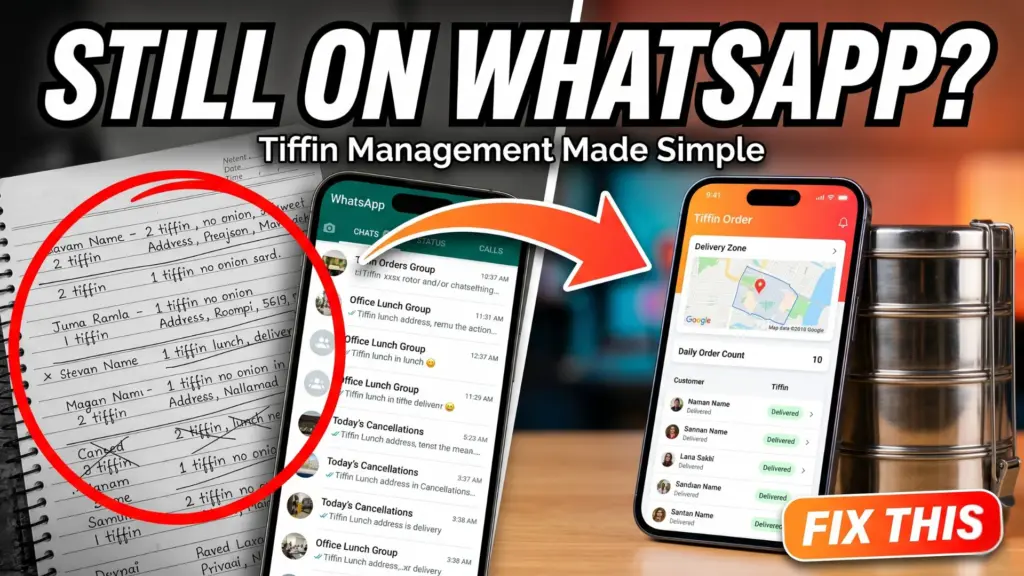
Even with well-planned zones, the real test is whether your delivery staff can see their own route every day without waiting for you to call them. Most tiffin businesses solve this informally at first, a WhatsApp message every morning, a verbal handoff, a printed list, but this breaks down quickly as soon as you are unavailable for even a single morning.
This is exactly the kind of problem Tiffin BucketX was built to solve.
It lets you create delivery zones directly in the system, assign delivery staff to each zone, and give your team a clear, organized view of their deliveries for the day, without depending on a phone call from you every morning. For a tiffin business managing multiple zones and staff members, this kind of structure quickly becomes essential, not optional.
See How Tiffin BucketX Handles Zones →If you are still relying on phone calls to coordinate deliveries every single day, it might be worth seeing how much smoother this part of the business can actually run.
Good food gets a tiffin business its first customers. Reliable delivery is what keeps them.
Final Thoughts
Organizing your service area into clear zones, assigning consistent delivery staff, and removing yourself as the single point of coordination is one of the highest-leverage changes a growing tiffin business can make. It is far easier to set up early than to fix after deliveries have already started slipping.
Stop coordinating deliveries by phone every morning.
Tiffin BucketX lets you set up zones, assign staff, and give your team a clear daily view, all without a single phone call from you.
Try Tiffin BucketX →